
Affiliate links — we may earn a commission
If you invest in Denmark, the aktiesparekonto is the account I’d look at first, purely because of the tax. Here’s how it works.
Quick answer
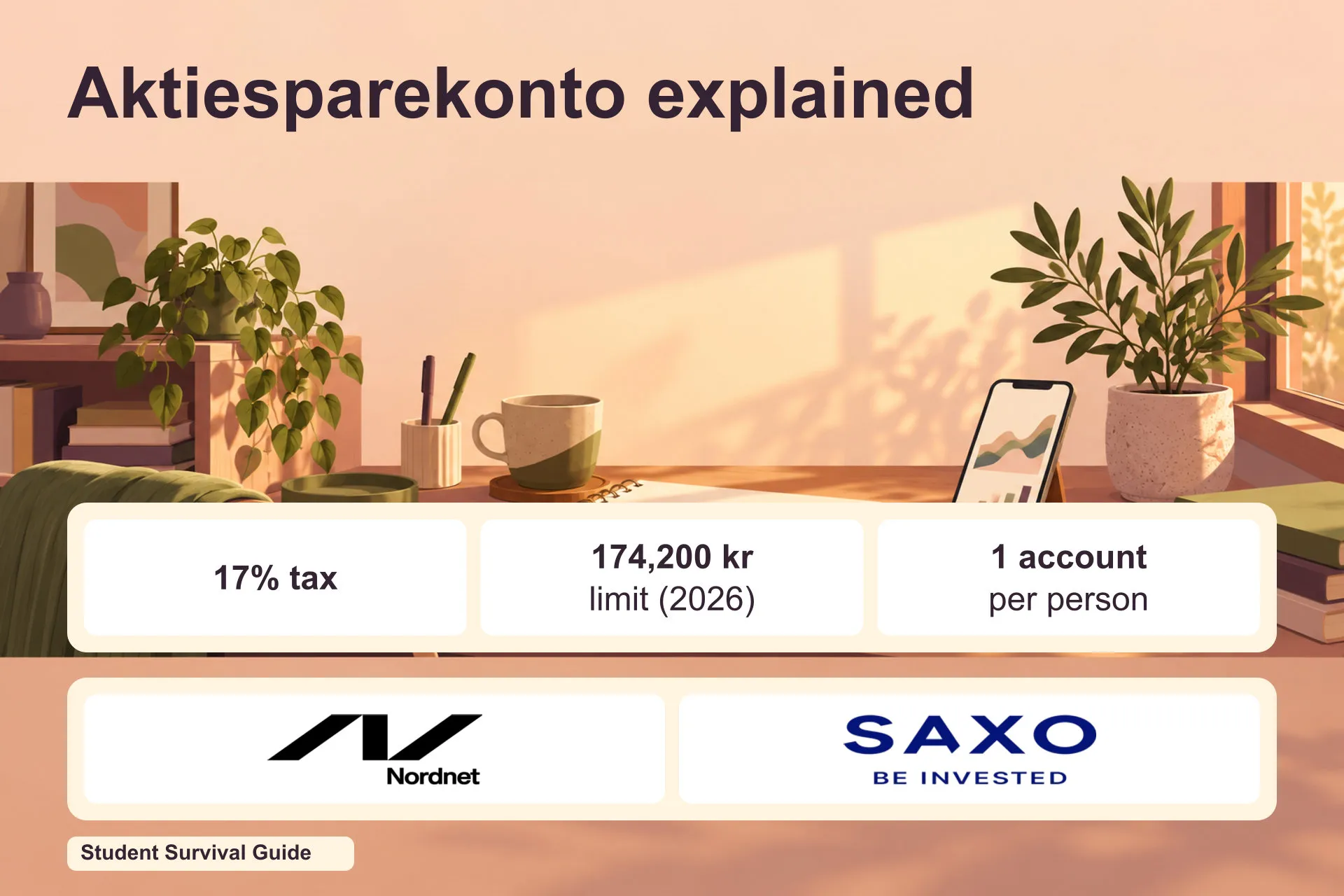
An aktiesparekonto (ASK) is a Danish investment account where gains are taxed at a flat 17% instead of 27% or 42%. In 2026 you can deposit up to 174,200 kr. You can hold shares and stock-based funds, including ETFs on SKAT’s positive list. The bank calculates and pays the tax for you. Danish banks and brokers like Nordnet and Saxo offer it; foreign apps like eToro and Lysa don’t.
The rules in 2026
| Rule | What it means |
|---|---|
| Deposit limit | 174,200 kr in 2026 (166,200 kr in 2025). It rises a little each year. |
| Tax | 17% on the year’s gain, whether you sell or not |
| Who pays the tax | The bank calculates it and takes it from the account |
| Losses | Carried forward and set against gains in later years, inside the account |
| Number of accounts | One per person, across all banks |
| Who can open one | Adults with a CPR number who are fully taxable in Denmark |
Why 17% matters
Outside an aktiesparekonto, gains on shares are taxed at 27% up to 79,400 kr a year in 2026 and 42% above that. On most funds held outside the account, tax is also due every year on the gain. Inside the account, every krone of gain is taxed at 17%.
On a 10,000 kr gain, that’s 1,700 kr in tax on an aktiesparekonto against 2,700 kr in a normal account.
How the tax works
Tax is calculated on the value at the end of the year compared with the start, plus what you put in and took out. This is the “lagerprincip”: you pay tax on gains even if you haven’t sold anything. The bank handles it, and it appears in your tax assessment automatically. You don’t need to report anything.
If the account falls in value, the loss is saved and set against gains in later years. Losses can’t be moved to your other income.
What you can buy
- Shares listed on a regulated market, Danish and foreign.
- Stock-based investment funds (investeringsforeninger), like Danish index funds.
- ETFs, but only those on SKAT’s positive list (positivlisten).
You can’t hold bonds or bond funds. Our index funds and ETFs guide explains the positive list.
How the limit works
In your first year you can deposit up to the limit. After that, the room is based on the account’s value on 31 December: if it’s below the new year’s limit, you can deposit the difference. If your investments have grown past the limit, you can’t add more, but you keep the growth.
For a student investing a few hundred kroner a month, it will take many years to reach.
Opening one
You need a CPR number, MitID and a Danish bank account. Open it online in about 10 minutes at a Danish bank or broker:
| Aktiesparekonto | Notes | |
|---|---|---|
| Nordnet | Yes | Most popular platform in Denmark; monthly savings plans; lower fees for new accounts’ first months |
| Saxo | Yes | Low minimum trading fees |
| Your own bank | Usually yes | Often higher fees; convenient if you want everything in one app |
| eToro, Lysa | No | Foreign platforms, normal tax rates apply |
Switching banks later
You can’t transfer an aktiesparekonto between banks. To move, you sell everything, close the account and open a new one elsewhere. The sale is taxed inside the account at 17% as usual, so it’s not expensive, but pick a platform you’re happy with from the start.
FAQ
Can I have an aktiesparekonto and a normal investment account?
Yes. You can have one aktiesparekonto plus as many normal investment accounts (aktiedepoter) as you like.
Can international students open an aktiesparekonto?
Yes, with a CPR number and full tax liability in Denmark, which applies to most students living here.
Can I withdraw money from my aktiesparekonto?
Yes, any time. Because the limit is checked against the account’s value at year-end, taking money out can give you room to deposit again from the next year.
Is an aktiesparekonto worth it for small amounts?
Yes. The 17% rate applies from the first krone, and there’s no fee for the account itself at most platforms.
Last checked: October 2026. Rules and limits are set by law and change. See Skattestyrelsen for the official rules.